The pantheon · Daoist
The Celestial Bureaucracy
天庭
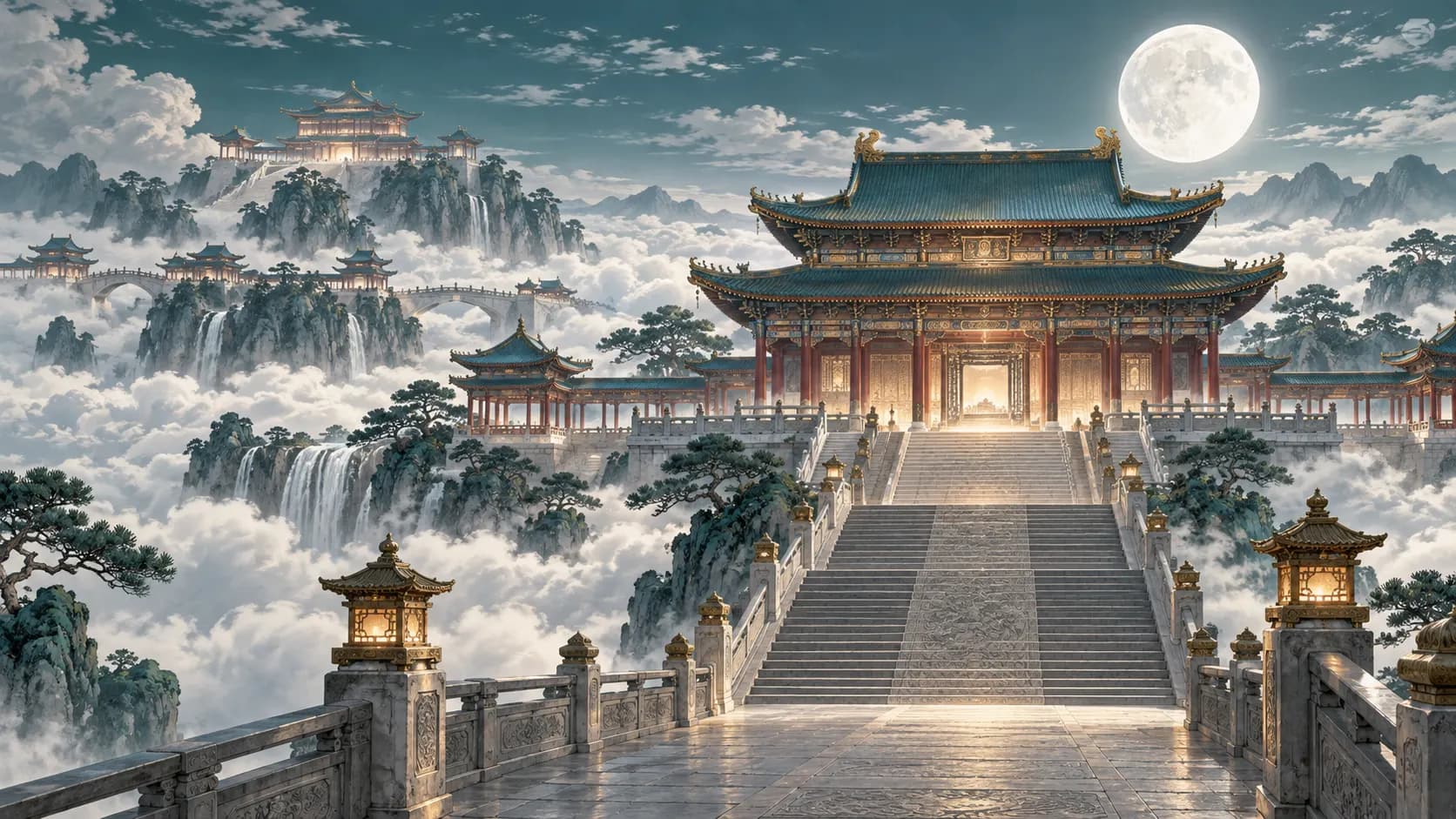
Heaven imagined as a working government — a court of ranked gods, ministries and officials, headed by the Jade Emperor and crowned by the Three Pure Ones. It is the largest and most familiar of the Chinese otherworlds.
The Chinese heaven is most often pictured as a state. The gods hold offices and ranks, keep registers, file reports, and are promoted or demoted for their performance, exactly as the officials of the earthly empire were. This is the celestial bureaucracy, Tianting (T'ien-t'ing, 天庭): not a paradise so much as a working administration, with the Jade Emperor at its head and, above him, the Three Pure Ones from whom the whole order descends.
This realm is a Daoist and popular-religious conception. It is usually described in the shared vocabulary of yin-yang and the Five Phases (wuxing) — but that framework is a common, pan-Chinese inheritance used across Confucian, Daoist, Buddhist and folk practice alike, not a Daoist invention. Daoists drew on it, as did everyone else, and using it says nothing about anyone's religious affiliation.
The bureaucratic picture is powerful, but it should be held lightly. Recent scholarship has begun to criticise the generalisation that most Chinese gods are bureaucratic. Robert Hymes, studying Song-dynasty and modern religion, argues instead for two models running side by side: the god as a remote official one memorialises through channels, and the god as a personal patron one approaches directly, more like a family protector than a magistrate. Both were live at once; neither is the whole truth.
So read the ranks below as one influential way the tradition has organised its heaven, not as a fixed civil-service chart. The order is genuinely old and widely shared, but its edges are softer, and far more personal, than any table of offices can show.
The order of ranks
The Three Pure Ones (三清)
The three emanations of the Dao at the origin of the cosmos, seated above the entire administration. Principle rather than office — they simply are, where the others govern.
清The Three Pure Ones三清The Jade Sovereign and the senior deities
The administrative apex of heaven beneath the Three Pure Ones, together with independent high deities such as the Queen Mother of the West, who presides over her own domain rather than a ministry.
玉Jade Emperor玉皇大帝母Queen Mother of the West西王母The ministries and star-officials (各部星君)
The departments of the celestial administration — thunder, wealth, letters, the planets — each an office with its own staff, memorials and jurisdiction.
文Wenchang文昌帝君財Caishen財神雷Leigong雷公金Taibai Jinxing太白金星Martial and dispatched deities
Warrior gods and demon-quellers who serve heaven on assignment and through regional cults, often at a distance from the court rather than seated within it.
二Erlang Shen二郎神
Everyone in this realm
Daoist
The Three Pure Ones三清
The three emanations of the Dao itself
Read →
Daoist
Jade Emperor玉皇大帝
Administrative sovereign of the celestial court
Read →
Daoist
Queen Mother of the West西王母
High goddess of the West and of immortality
Read →
Daoist
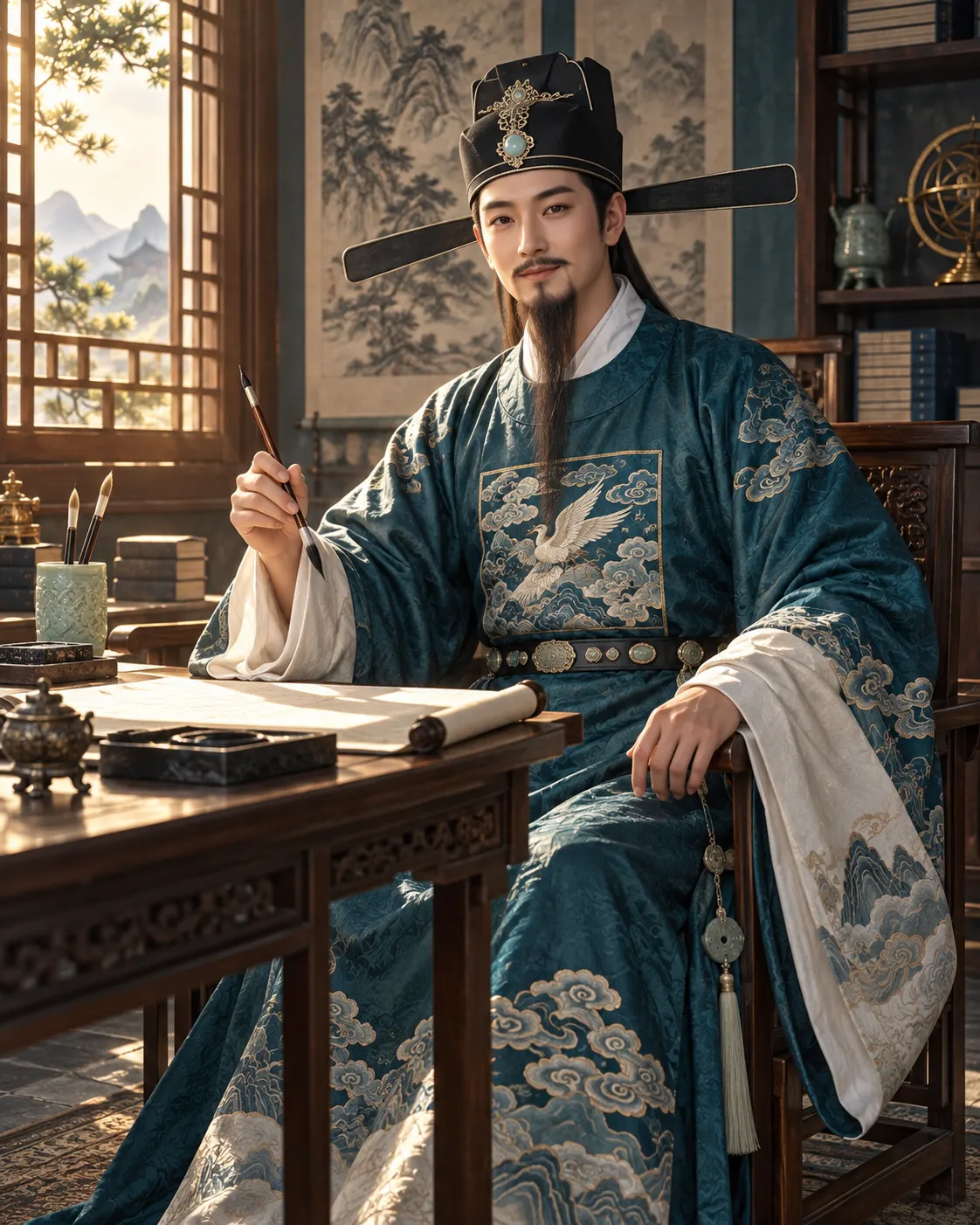
Wenchang文昌帝君
Star-lord who presides over letters and examinations
Read →
Daoist
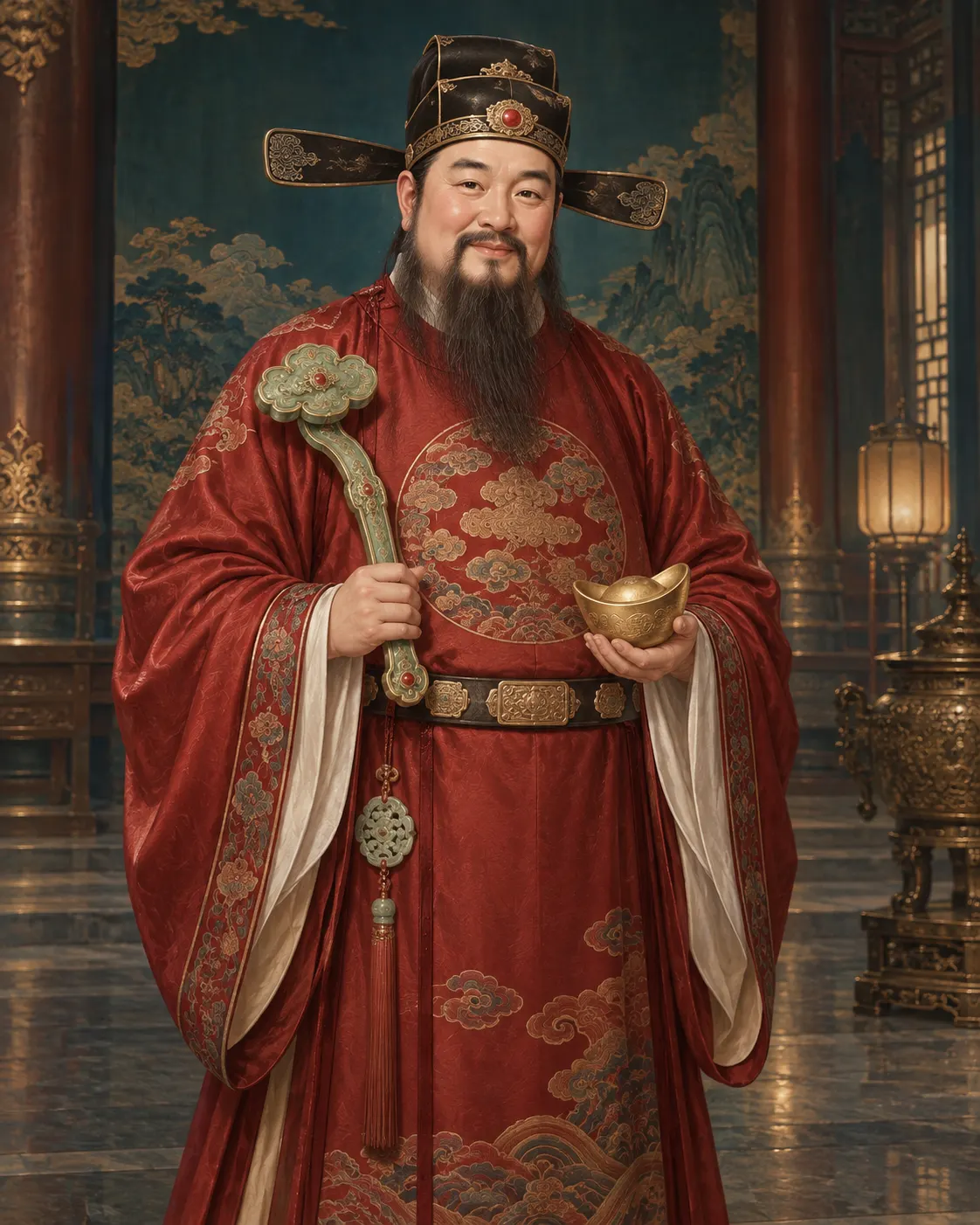
Caishen財神
The office of wealth, held by several gods
Read →
Daoist
Erlang Shen二郎神
Three-eyed warrior god who quells floods and demons
Read →
Daoist
Leigong雷公
Thunder officer who carries out heaven's sentences
Read →
Daoist
Taibai Jinxing太白金星
The planet Venus as heaven's grey-haired envoy
Read →