The pantheon
A heaven with an administration, and everything that grew around it.
Thousands of gods, no single authoritative list, and traditions that share temples without sharing a system.
天庭
The Celestial Bureaucracy
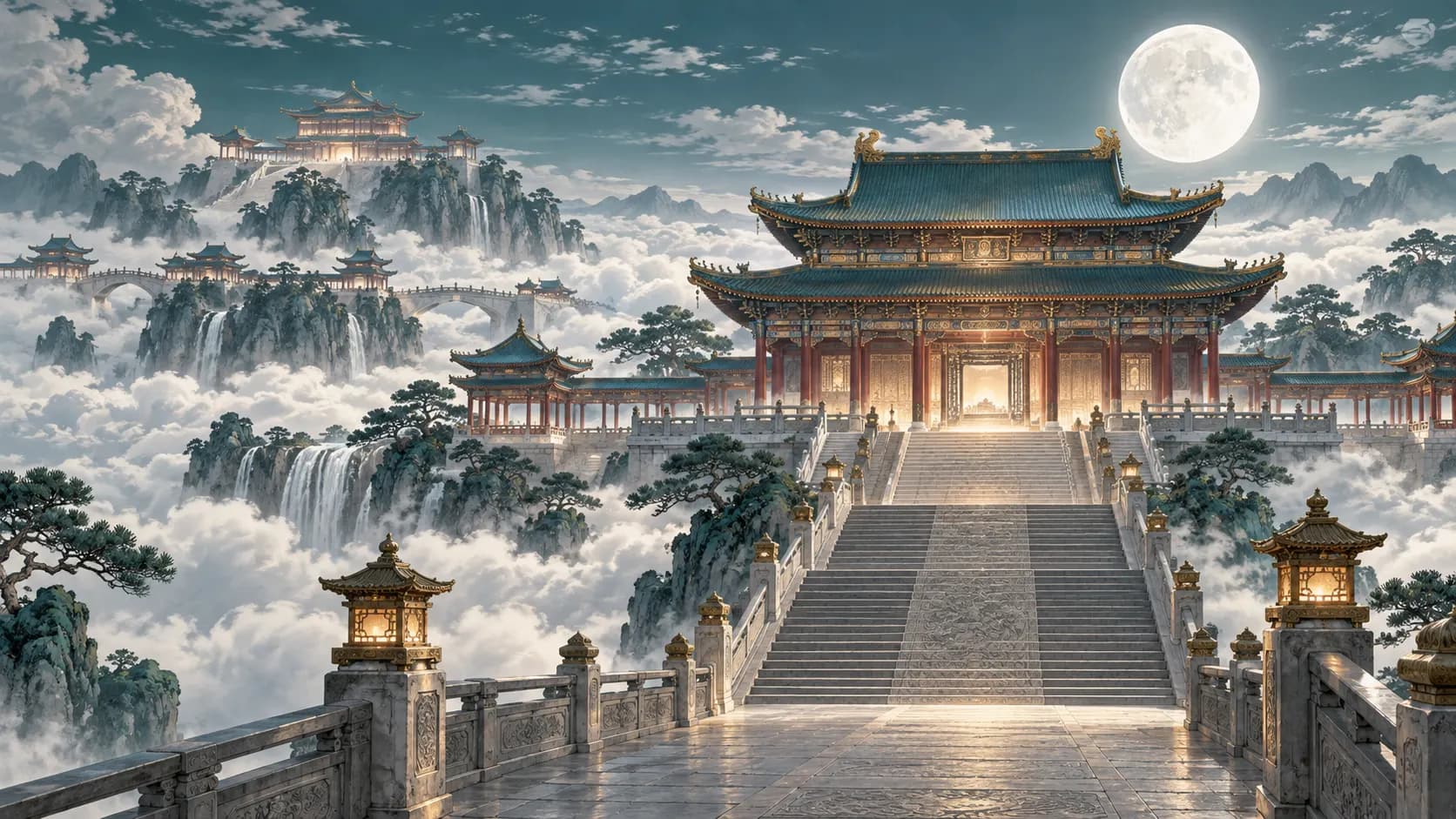
Heaven imagined as a working government — a court of ranked gods, ministries and officials, headed by the Jade Emperor and crowned by the Three Pure Ones. It is the largest and most familiar of the Chinese otherworlds.
The Three Pure Ones (三清)
The three emanations of the Dao at the origin of the cosmos, seated above the entire administration. Principle rather than office — they simply are, where the others govern.
清The Three Pure Ones三清The Jade Sovereign and the senior deities
The administrative apex of heaven beneath the Three Pure Ones, together with independent high deities such as the Queen Mother of the West, who presides over her own domain rather than a ministry.
玉Jade Emperor玉皇大帝母Queen Mother of the West西王母The ministries and star-officials (各部星君)
The departments of the celestial administration — thunder, wealth, letters, the planets — each an office with its own staff, memorials and jurisdiction.
文Wenchang文昌帝君財Caishen財神雷Leigong雷公金Taibai Jinxing太白金星Martial and dispatched deities
Warrior gods and demon-quellers who serve heaven on assignment and through regional cults, often at a distance from the court rather than seated within it.
二Erlang Shen二郎神
Daoist
The Celestial Bureaucracy
Heaven imagined as a working government — a court of ranked gods, ministries and officials, headed by the Jade Emperor and crowned by the Three Pure Ones. It is the largest and most familiar of the Chinese otherworlds.
Daoist
The Three Pure Ones三清
The three emanations of the Dao itself
Read →
Daoist
Jade Emperor玉皇大帝
Administrative sovereign of the celestial court
Read →
Daoist
Queen Mother of the West西王母
High goddess of the West and of immortality
Read →
Daoist
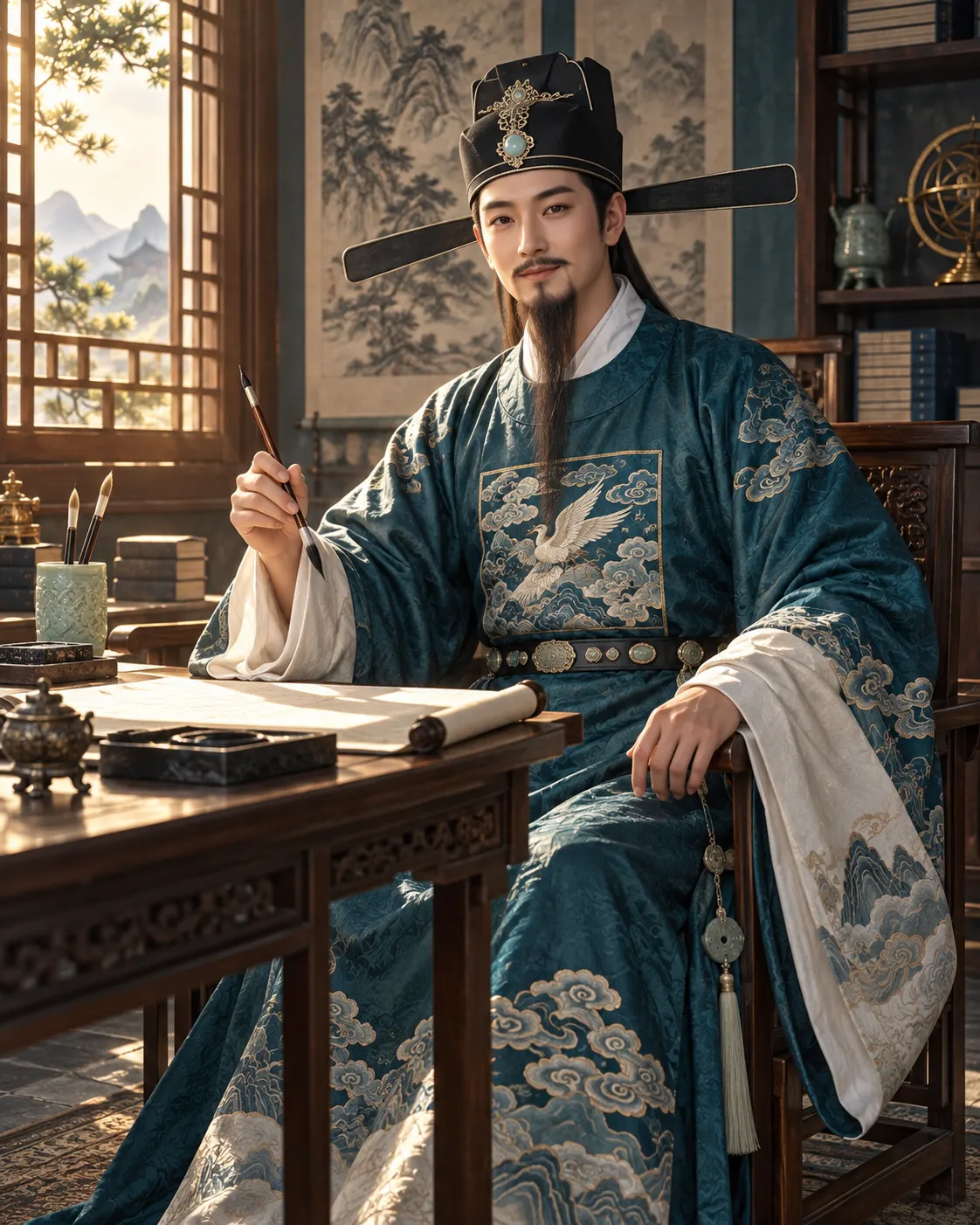
Wenchang文昌帝君
Star-lord who presides over letters and examinations
Read →
Daoist
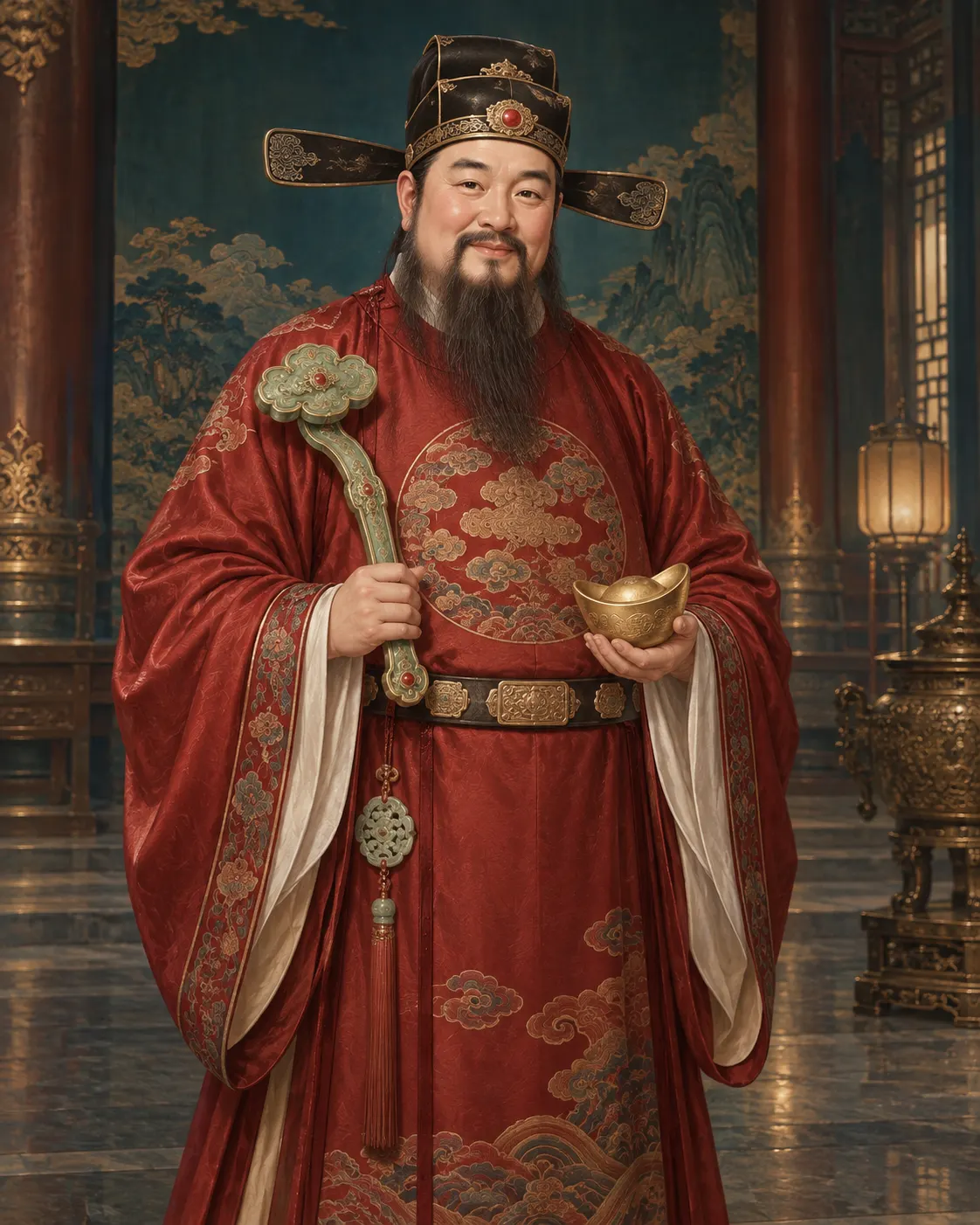
Caishen財神
The office of wealth, held by several gods
Read →
Daoist
Erlang Shen二郎神
Three-eyed warrior god who quells floods and demons
Read →
Daoist
Leigong雷公
Thunder officer who carries out heaven's sentences
Read →
Daoist
Taibai Jinxing太白金星
The planet Venus as heaven's grey-haired envoy
Read →
Syncretic
The Ten Courts of the Underworld
A composite Chinese vision of the afterlife as a government office — courts, judges, ledgers and escorts — assembled over centuries and never fixed into a single standard map.
Syncretic
Yanluo Wang閻羅王
King Yama, judge of the fifth court
Read →
Syncretic
Meng Po孟婆
Lady Meng, who pours the broth of forgetting
Read →
Syncretic
Heibai Wuchang黑白無常
The Black and White officers of impermanence
Read →
Syncretic
Niutou Mamian牛頭馬面
Ox-Head and Horse-Face, wardens of the gates
Read →
Syncretic
Cui Panguan崔判官
Judge Cui, keeper of the ledgers of life and death
Read →
Folk religion
Chenghuang城隍
The City God, magistrate of the local dead
Read →
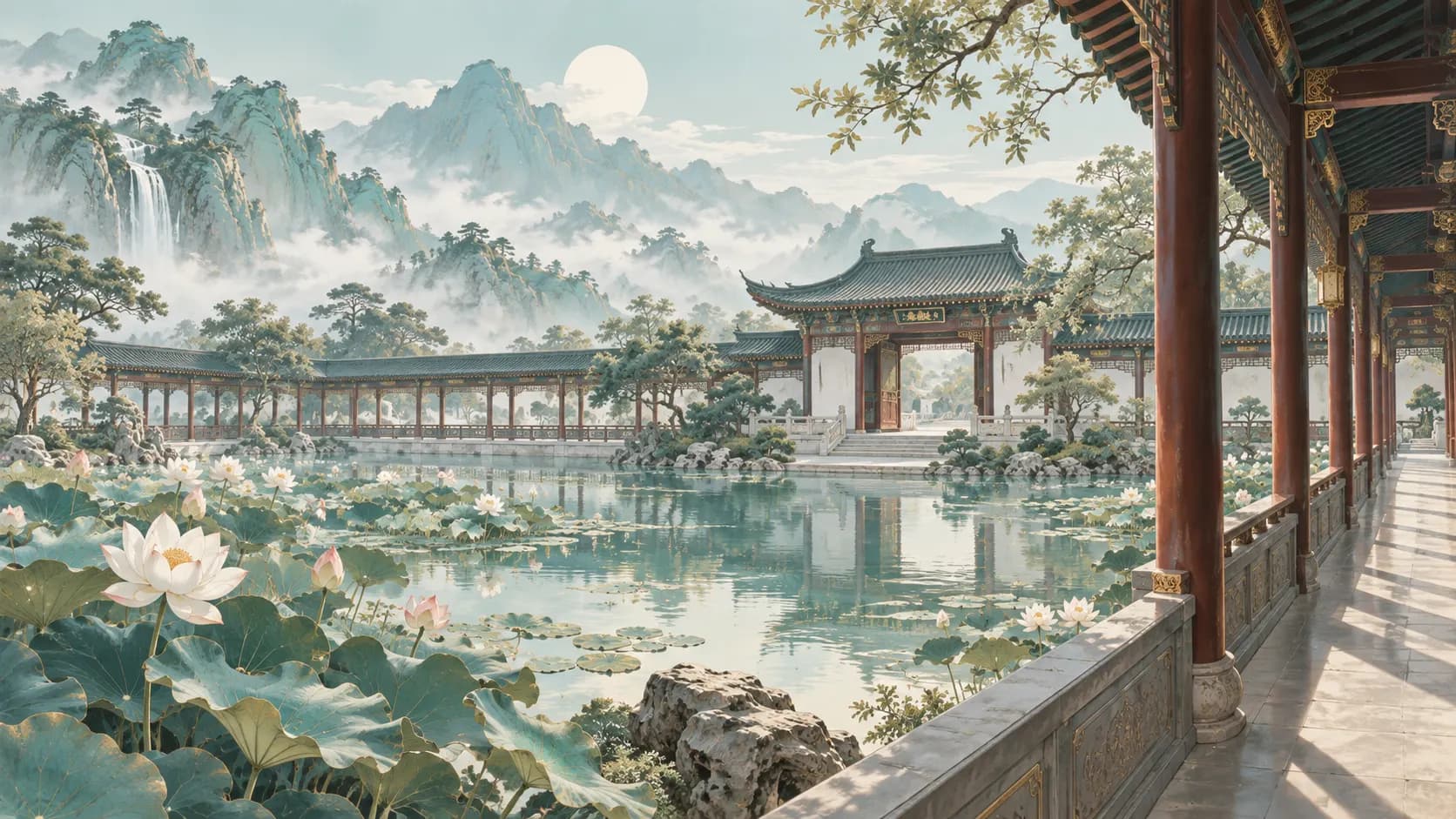
Buddhist
The Six Realms of Rebirth
The Buddhist map of samsara: six kinds of existence into which beings are reborn again and again until they awaken. The figures here are honoured as those who work to free beings from that cycle.
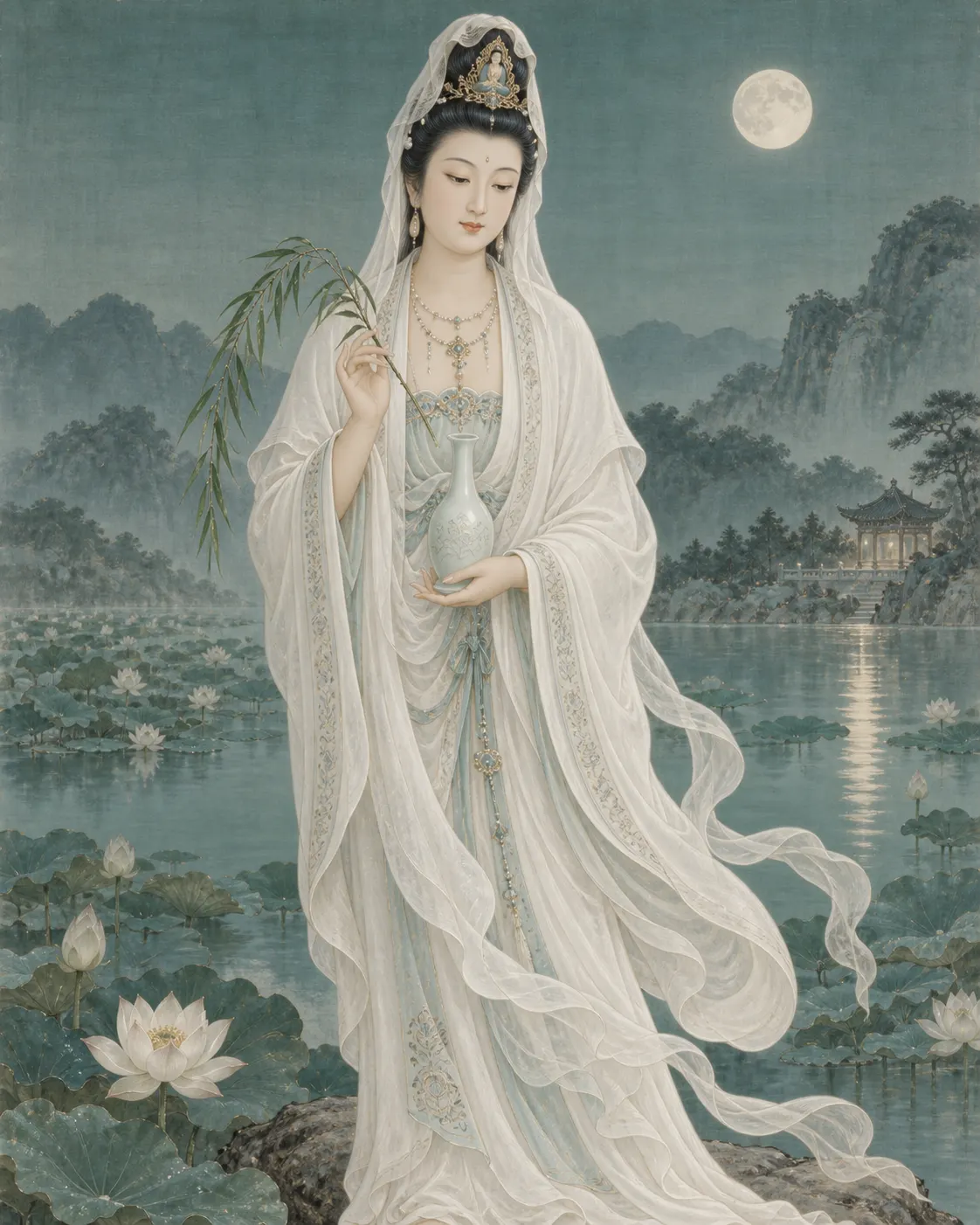
Buddhist
Guanyin觀音
Bodhisattva of Compassion
Read →
Buddhist
Dizang地藏
Bodhisattva of the Great Vow
Read →
Buddhist
Amitabha阿彌陀佛
Buddha of Infinite Light and Life
Read →
Buddhist
Maitreya彌勒
The Future Buddha
Read →
Buddhist
Weituo韋馱
Guardian of the Dharma
Read →
Buddhist
Samantabhadra普賢
Bodhisattva of Great Practice
Read →
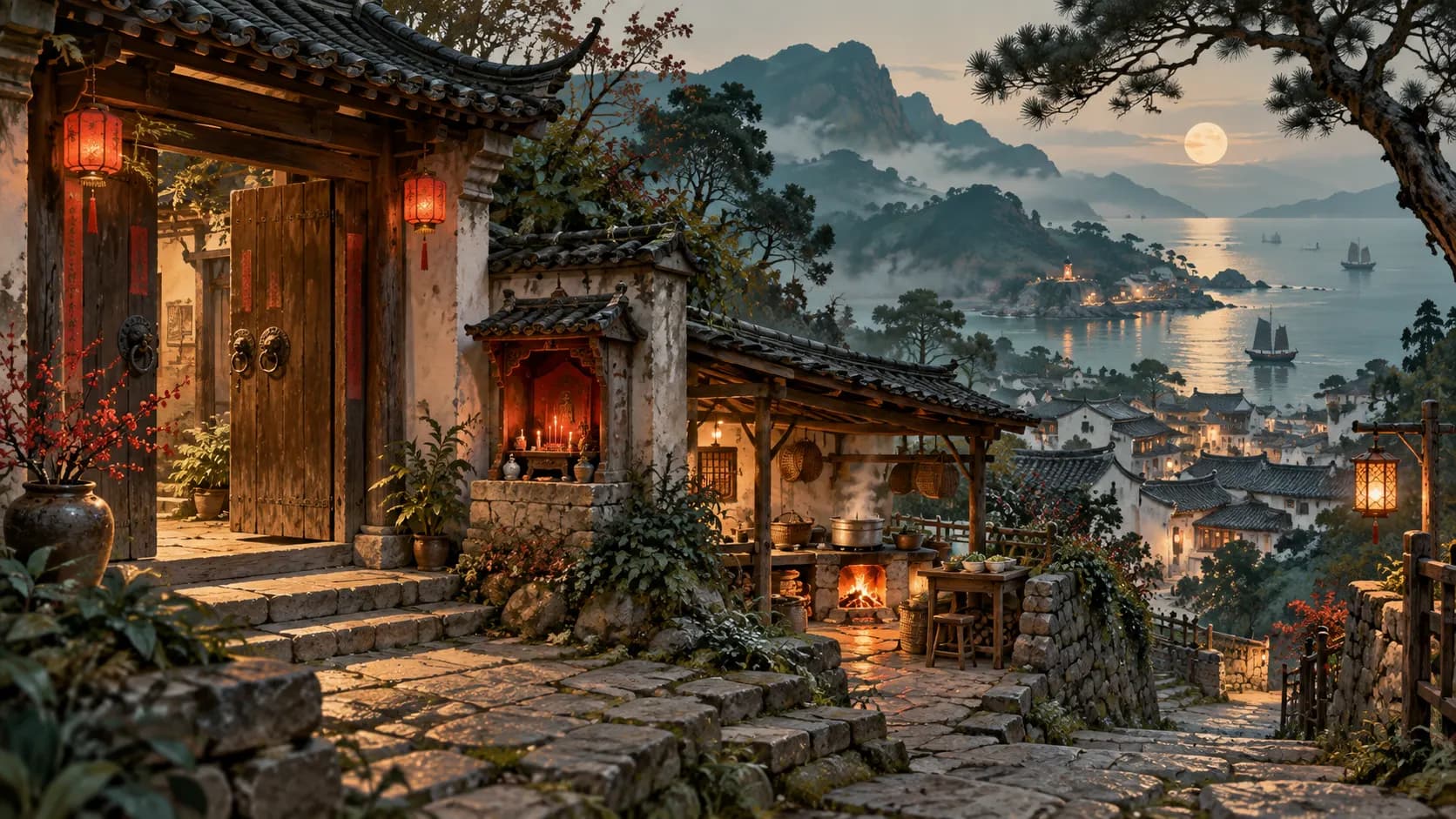
Folk religion
Folk Deities (民間信仰)
The gods of everyday Chinese life: household guardians, local earth spirits, deified heroes and beloved immortals, worshipped across village, home and harbour outside any single organised religion.
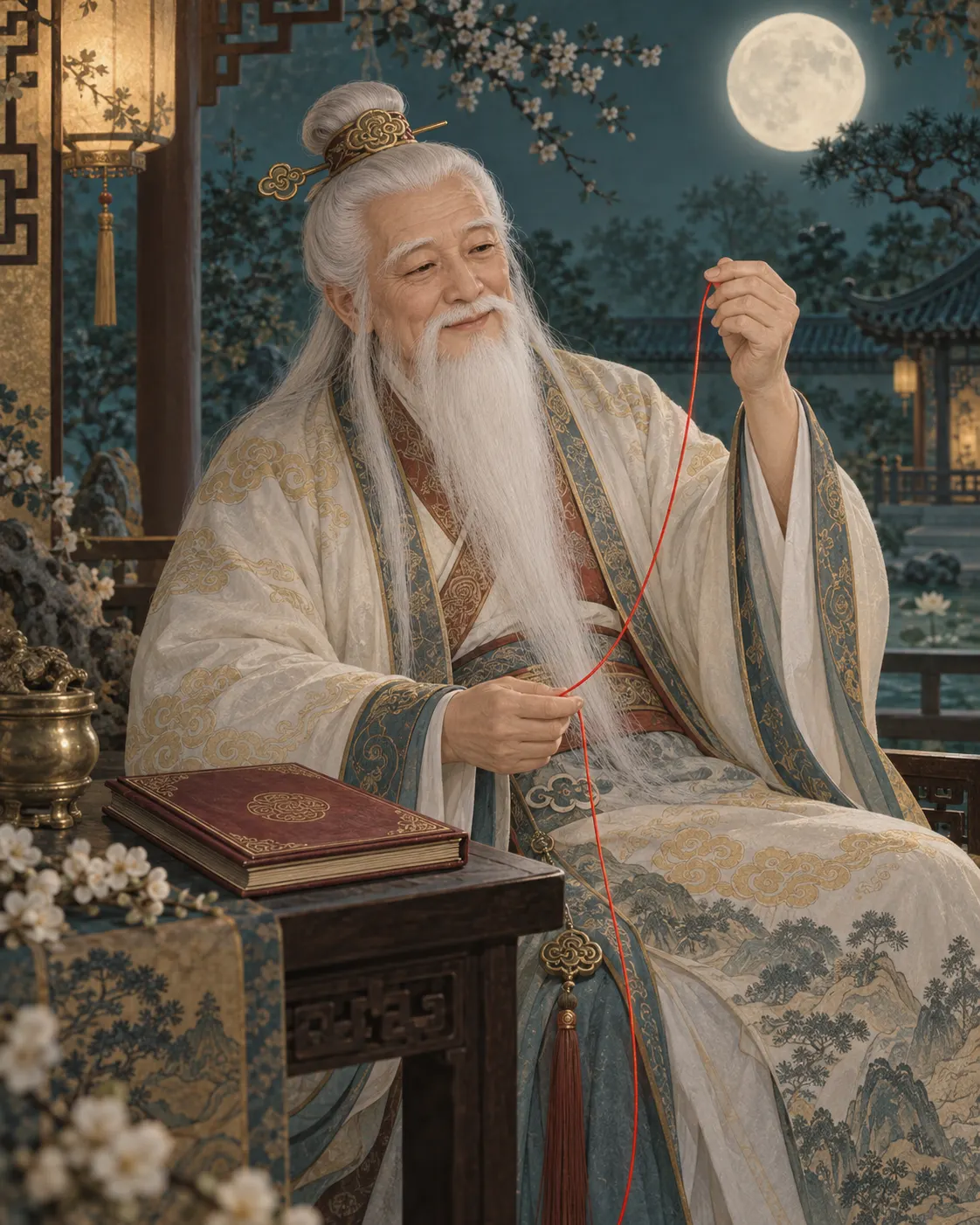
Folk religion
Yue Lao月老
The old man under the moon who ties the red thread of marriage.
Read →
Folk religion
Tudigong土地公
The local earth god, lowest official in the celestial bureaucracy.
Read →
Folk religion
Zao Shen灶神
The Kitchen God, who watches the family and reports once a year to Heaven.
Read →
Folk religion
Menshen門神
The door gods, guardians pasted on the gate to turn away evil.
Read →
Folk religion
Mazu媽祖
The deified sea goddess who guards sailors and fishermen.
Read →
Folk religion
Zhong Kui鍾馗
The demon-queller, a ghost who hunts and commands other ghosts.
Read →
Folk religion
Guan Yu關羽
The general deified as a god of loyalty, war and wealth.
Read →
Folk religion
The Eight Immortals八仙
Eight legendary Daoist immortals, each a mortal who attained the Dao.
Read →
Seasonal observances
Traditions have calendars, not just characters.
The wealth gods at New Year
The fifth day of the first lunar month is when Caishen is received — the single busiest moment in the Chinese religious calendar for anything to do with money.
Read the observance →Ghost Month and the open gate
For one lunar month the gate of the underworld is said to stand open, and the living make offerings to the dead who have no one to make them.
Read the observance →Qingming and the tending of graves
The one day in the year when the relationship with the ancestors is maintained in person, with a broom and a cloth rather than a prayer.
Read the observance →Where these ideas come from
One thing that is not what it looks like.
Yin-yang, the Five Phases (wuxing), and qi are not Daoist inventions. They belong to a shared, pan-Chinese cosmology that predates and extends far beyond any single tradition — used across Confucian, Daoist, Buddhist, medical, and folk practice alike. Daoists drew on this common inheritance, as did everyone else. Using these concepts says nothing about anyone’s religious affiliation. The same goes for the Yijing (I Ching, 易經). It is older than both Confucianism and Daoism as distinct traditions, and was later canonised as one of the Confucian Five Classics. Daoists, Confucians and Buddhists have all read it. Consulting it makes no one a Daoist — or a Confucian. Fengshui sits in the same place: scholars classify it as Chinese popular religion and vernacular cosmology. Some Daoists have practised it throughout history; that does not make it Daoist in origin or essence.
These pages are written from published scholarship and primary texts, and each figure lists what it was written from. Where sources disagree, we say so rather than picking one and presenting it as settled. This site is not affiliated with, endorsed by, or speaking for any temple, monastery, lineage, or religious organisation. Nothing here is a substitute for a tradition’s own teachers. We describe what practitioners have believed and done. Describing a belief is not asserting it is true.