The library
A map of Eastern thought, belief and tradition.
Chinese metaphysics is a network of traditions. Buddhas, Daoist deities and local gods belong to different histories. Start with a question, follow its ideas and read the sources in context.
6 topics · 40 study articles · 37 chart and custom guides · English & Chinese
Choose a thread to follow
Start with a question. Follow one thread at a time.
01 · 4 steps
First visit: build a map
Learn how the categories differ and how to read a claim.
02 · 6 steps
Metaphysics: symbols to systems
Understand the shared vocabulary, then compare distinct models.
- The Five Phases: classification and relationships
- The Changes: text, commentary, images and meaning
- Wei-Jin Xuanxue: being, naturalness and social order
- Stems, branches and calendars: coordinates of time
- Four Pillars of Destiny: structure and interpretive approaches
- Six-line divination: a figure becomes a relationship structure
03 · 6 steps
Buddhism: questions and paths
Start with central questions before choosing a school to explore.
04 · 6 steps
Dao and deities: texts to daily life
Read philosophy, communities, deities and local practice in context.
- Laozi and Zhuangzi: Dao, action and perspective
- Daoist history: scriptures, communities and transmission
- The Three Pure Ones, Jade Emperor and Daoist pantheons
- Gods, ancestors and ghosts: relationships and remembrance
- The Three Teachings: exchange, rivalry and synthesis
- How to read a temple: space, images, texts and people
Six connected areas of study
The topic directory
Ask what a tradition studies, how its concepts work and which texts it reads. These categories are a learning guide; shared words can mean different things. Search covers article titles, summaries and classic titles.
40 of 40 articles
Maps & methods · 3
Separate questions, traditions and evidence before reading the sources.
Introduction
A map of philosophy, divination and religion
Distinguish intellectual questions, shared cosmology, technical arts and religious communities before studying their connections.
Introduction
Reading evidence, belief and claims about effects
Separate the existence of a practice, what its texts teach, scholarly interpretation and claims about outcomes.
Introduction
A reading route from one passage to a knowledge map
Build a durable study practice through concepts, identified editions, focused branches and notes that remain open to correction.
Ideas & symbols · 6
Qi, yin–yang, the Five Phases, the Changes, philosophy and calendars.
Introduction
Dao, qi and yin-yang as shared concepts
Learn a vocabulary of relationships and transformation without converting historical concepts into modern physical quantities.
Introduction
The Five Phases: classification and relationships
Understand Wood, Fire, Earth, Metal and Water as a historical system of correspondences, not a chemical inventory.
Introduction
The Changes: text, commentary, images and meaning
Learn the layers of the Yijing and distinguish its figures from the many later methods that use them.
Further study
Wei-Jin Xuanxue: being, naturalness and social order
Meet an intellectual tradition in which interpreting inherited classics became a way of making new philosophical arguments.
Introduction
Stems, branches and calendars: coordinates of time
Distinguish the sixty-sign cycle, the lunisolar calendar and solar terms before interpreting a chart.
Further study
River Chart, Luo Writing and the Nine Palaces
Separate classical names, later diagrams and the technical layouts built from them.
Divination systems · 8
The distinct models behind natal charts, oracles, fengshui and date selection.
Further study
Four Pillars of Destiny: structure and interpretive approaches
Understand birth-time inputs, relational categories and the different priorities within the Four Pillars tradition.
Further study
Ziwei Doushu: palaces, stars and different editions
Explore a birth-chart tradition organized around symbolic locations and star assignments rather than observed celestial coordinates.
Further study
Six-line divination: a figure becomes a relationship structure
Distinguish generating a figure, assigning signs and interpreting a question within the six-line tradition.
Further study
Plum Blossom Numerology: numbers, images and ti-yong
Examine a tradition that organizes times and observed situations into figures, with interpretation shaped by context.
Further study
Qimen Dunjia: time, direction and layered signs
Understand a Nine Palace system while distinguishing arrangement rules, military narratives and claims about external events.
Further study
Liuren and Taiyi: related arts with different structures
Compare consultation relationships and longer political time schemes without treating the Three Styles as interchangeable.
Introduction
Fengshui: landscape, direction and social life
Distinguish the cultural interpretation of space from claims about building conditions, health or personal outcomes.
Introduction
Date selection and almanacs: why prescriptions differ
Separate calendar information, activity-specific rules and local customs when reading traditional almanacs.
Buddhism · 10
From suffering and liberation to canons, schools, Buddhas and bodhisattvas.
Introduction
Buddhism: awakening, community and history
Start with Buddha, Dharma and Sangha, then connect the central questions, forms of practice and histories of transmission.
Introduction
The Four Truths and the Eightfold Path
Read the four truths as distinct tasks, rather than a claim that life is only misery or that every aspiration must disappear.
Further study
Dependent origination, impermanence and nonself
Explore conditioned experience and identity while distinguishing dependent origination from vague causal slogans and later accounts of emptiness.
Introduction
Karma, rebirth and liberation without fatalism
Distinguish intentional action, its results, rebirth and liberation, and understand why suffering does not justify blame.
Introduction
Buddhist canons: collections, translations and versions
Learn the distinctions among discourse, discipline and commentary, and navigate Pali, Chinese and Tibetan collections.
Introduction
Theravada, East Asian and Tibetan traditions
Compare language, geography, ideals and monastic lineages without ranking traditions as higher or lower forms.
Further study
Madhyamaka and Yogacara: emptiness and cognition
Enter Indian Mahayana philosophy through independent existence, conditioned cognition and the formation of mistaken experience.
Further study
Tiantai and Huayan: interpreting a diverse canon
Explore classifications of teachings, Tiantai contemplation and Huayan relationality as responses to scriptural diversity.
Introduction
Chan and Pure Land: awakening, vows and practice
Understand awakening, recollection of the Buddha and Pure Land scriptures while keeping both differences and historical overlap visible.
Introduction
Buddhas, bodhisattvas and protectors
Distinguish awakening, vows, teaching and protection before reading the stories and images of major Buddhist figures.
Daoist traditions · 6
Laozi and Zhuangzi, religious communities, pantheons, ritual and cultivation.
Introduction
Laozi and Zhuangzi: Dao, action and perspective
Read the questions of the Laozi and Zhuangzi, including their differences and their later places within Daoist traditions.
Introduction
Daoist history: scriptures, communities and transmission
Follow early Celestial Masters, Shangqing and Lingbao, later reorganization and Quanzhen without reducing Daoism to one founder story.
Further study
Zhengyi and Quanzhen: transmission and community
Compare registers, precepts, monasteries and household clergy while retaining historical and regional variation.
Introduction
The Three Pure Ones, Jade Emperor and Daoist pantheons
Distinguish divine expressions of Dao, heavenly administration and perfected beings, with attention to the period and text of each arrangement.
Further study
Daoist ritual: offerings, registers and liturgy
Read ritual through texts, qualifications, space, music and community relationships rather than isolated symbolic techniques.
Further study
External and internal alchemy: matter, body and symbol
Understand alchemical history and vocabulary without turning old recipes or bodily symbols into instructions for self-experimentation.
Deities & lived culture · 7
Ancestors, local gods, festivals, temples and encounters between traditions.
Introduction
Lots, dreams, characters and physiognomy in everyday life
Recognize different interpretive materials and local settings instead of treating every practice as one universal symbolic code.
Introduction
Gods, ancestors and ghosts: relationships and remembrance
Read these categories through family and community relationships, distinguishing narrative, remembrance and religious belief.
Introduction
Local deities and the networks that carry them
Explore how territorial, household and widely traveled deities relate to place, work, family and migration.
Further study
Death, underworlds and salvation
Place ancestral remembrance, Buddhist rebirth, Daoist salvation and the Ten Kings together without forcing them into one timeless map.
Introduction
Seasonal festivals: calendars, families and sacred time
See how New Year, Qingming, the Dragon Boat Festival and seventh-month observances connect calendars, remembrance and communal life.
Further study
The Three Teachings: exchange, rivalry and synthesis
Study how Confucian, Buddhist and Daoist traditions interpret, contest and borrow from one another alongside practices outside these labels.
Introduction
How to read a temple: space, images, texts and people
Turn a visit into grounded observation by connecting names, inscriptions, images and the activities of the community.
Explore charts and everyday customs
The original zodiac, element, Day Master and Four Pillars guides are all here to read alongside the wider topic map.
12 pages
Zodiac Signs
The twelve animals, one page each: what the tradition reads into the sign, how it is said to handle money, and which years it covers.
Zodiac
Year of the Rat (鼠): Traits, Wealth Style and Compatibility
First of the twelve animals, fixed to the Water element — read for resourcefulness, timing and the quiet accumulation of small advantages.
Zodiac
Year of the Ox (牛): Traits, Wealth Style and Compatibility
Second of the twelve animals, fixed to the Earth element — read for endurance, method and value built by repetition.
Zodiac
Year of the Tiger (虎): Traits, Wealth Style and Compatibility
Third of the twelve animals, fixed to the Wood element — read for initiative, appetite for risk and value that follows the first move.
Zodiac
Year of the Rabbit (兔): Traits, Wealth Style and Compatibility
Fourth of the twelve animals, fixed to the Wood element — read for discernment, diplomacy and value preserved rather than chased.
Zodiac
Year of the Dragon (龙): Traits, Wealth Style and Compatibility
Fifth of the twelve animals and the only mythical one, fixed to the Earth element — read for scale, authority and value that arrives in large steps.
Zodiac
Year of the Snake (蛇): Traits, Wealth Style and Compatibility
Sixth of the twelve animals, fixed to the Fire element — read for strategy, discretion and value that comes from knowing more than is said.
Zodiac
Year of the Horse (马): The 2026 Fire Horse Year
Seventh of the twelve animals, fixed to the Fire element — and the sign of 2026, a Fire Horse year that arrives once every sixty.
Zodiac
Year of the Goat (羊): Traits, Wealth Style and Compatibility
Eighth of the twelve animals, fixed to the Earth element — read for craft, gentleness and value that accrues to good taste.
Zodiac
Year of the Monkey (猴): Traits, Wealth Style and Compatibility
Ninth of the twelve animals, fixed to the Metal element — read for invention, versatility and value found in the gap others missed.
Zodiac
Year of the Rooster (鸡): Traits, Wealth Style and Compatibility
Tenth of the twelve animals, fixed to the Metal element — read for precision, candour and value that follows a reputation for standards.
Zodiac
Year of the Dog (狗): Traits, Wealth Style and Compatibility
Eleventh of the twelve animals, fixed to the Earth element — read for loyalty, judgement of character and value built on trust.
Zodiac
Year of the Pig (猪): Traits, Wealth Style and Compatibility
Last of the twelve animals, fixed to the Water element — read for generosity, appetite for life and value that comes back through goodwill.
5 pages
The Five Elements
Wood, Fire, Earth, Metal and Water — the vocabulary the whole system is built from, and where every colour and material recommendation comes from.
Element
The Wood Element (木 Mù): Growth, Beginnings and Direction
The first of the five elements — spring, the east, the colour green, and everything in a chart that is still becoming what it will be.
Element
The Fire Element (火 Huǒ): Visibility, Warmth and Expression
The second of the five elements — summer, the south, the colour red, and everything in a chart that is meant to be seen.
Element
The Earth Element (土 Tǔ): Stability, Capacity and the Middle
The third of the five elements — the centre rather than a season, the colour yellow, and everything in a chart that holds, stores and steadies.
Element
The Metal Element (金 Jīn): Precision, Refinement and Cutting Away
The fourth of the five elements — autumn, the west, the colour white, and everything in a chart that judges, refines and finishes.
Element
The Water Element (水 Shuǐ): Depth, Movement and Reserve
The fifth of the five elements — winter, the north, the colour black, and everything in a chart that moves, listens and holds something back.
10 pages
The Ten Day Masters
The character that stands for you in a BaZi chart. Ten of them, each with an image you can actually hold on to.

Day Master
Yang Wood Day Master (甲 Jiǎ): The Roof Beam
The upright, load-bearing timber of the ten Day Masters — read for structure, direction and the kind of value that accumulates by holding a shape.

Day Master
Yin Wood Day Master (乙 Yǐ): The Wisteria
The climbing, flexible wood of the ten Day Masters — read for adaptability, patience and value that gathers through what it attaches to.

Day Master
Yang Fire Day Master (丙 Bǐng): The Noon Sun
The broad, impartial daylight of the ten Day Masters — read for visibility, generosity and value that follows being known.

Day Master
Yin Fire Day Master (丁 Dīng): The Lantern
The contained, directed flame of the ten Day Masters — read for focus, discernment and value that comes from depth rather than reach.

Day Master
Yang Earth Day Master (戊 Wù): The Rampart
The immovable, sheltering earth of the ten Day Masters — read for stability, stewardship and value that collects by staying put.

Day Master
Yin Earth Day Master (己 Jǐ): The Furrow
The tilled, receptive earth of the ten Day Masters — read for nurture, capacity and value that grows as the ground is worked.
Day Master
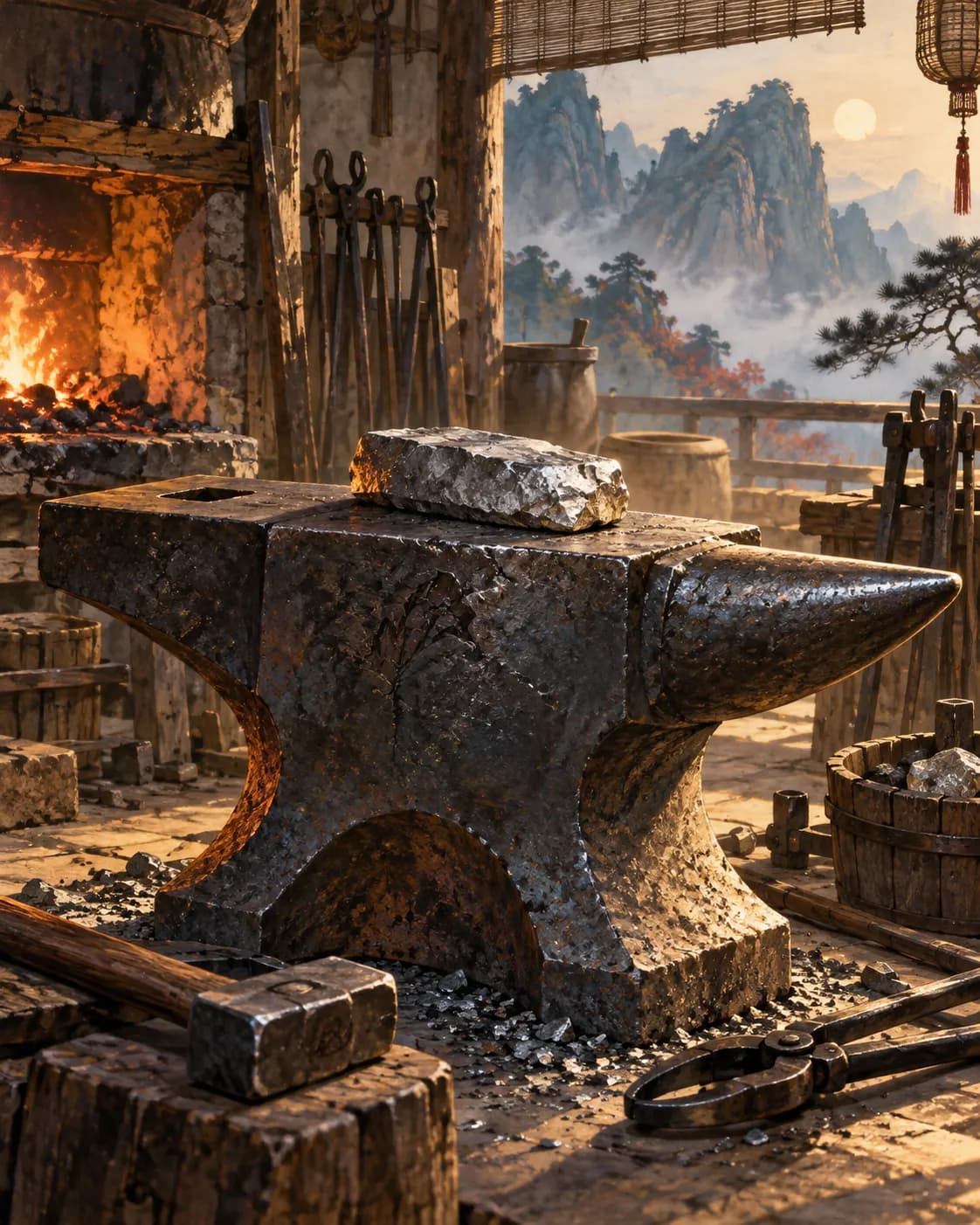
Yang Metal Day Master (庚 Gēng): The Anvil
The unrefined, load-taking metal of the ten Day Masters — read for decisiveness, resilience and value that comes from what gets finished.

Day Master
Yin Metal Day Master (辛 Xīn): The Silver Needle
The refined, exacting metal of the ten Day Masters — read for discernment, precision and value that comes from standards rather than volume.

Day Master
Yang Water Day Master (壬 Rén): The Tide
The wide, moving water of the ten Day Masters — read for adaptability, scale and value that arrives through movement and exchange.

Day Master
Yin Water Day Master (癸 Guǐ): The Mist
The fine, pervasive water of the ten Day Masters — read for perception, patience and value that accumulates out of sight before it shows.
10 pages
Foundations
How the system works, what the terms mean, and the customs — Ben Ming Nian, Tai Sui — that most people meet before they meet the theory.
Primer
What Is BaZi (八字)? The Four Pillars of Destiny, Explained
The Chinese birth-chart system that turns a birth moment into eight characters — what it is, what it is not, and where to start reading it.
Primer
The Four Pillars Explained: Year, Month, Day and Hour
What each of the four pillars covers, why the day pillar matters most, and what changes when the birth hour is unknown.
Primer
Day Master Strength: What "Strong" and "Weak" Actually Mean
The most misread idea in BaZi — a measure of balance within a chart, not a verdict on the person holding it.
Primer
Hidden Stems (藏干): Why Twelve Branches Hold More Than Twelve Elements
The layer inside each Earthly Branch that makes a chart specific — and the reason two charts with the same visible characters can read differently.
Primer
What "Your Element" Means — and Why You Have Three of Them
The most common question in Chinese astrology has three different correct answers. Here is how to tell them apart.
Primer
How the Tradition Reads Wealth in a Chart (财星)
The wealth element is the one your Day Master controls. That single rule is where every colour, material and direction recommendation comes from.
Primer
Solar Terms (节气): Why the Chinese Month Does Not Start on the 1st
The twenty-four-part solar calendar that decides which pillar your birth belongs to — and why monthly forecasts update around the 4th to the 7th.
Primer
Chinese and Western Astrology: How They Actually Differ
One reads planets against a birth moment; the other reads a calendar notation of it. Same question, completely different machinery.
Practice
Ben Ming Nian (本命年): Your Own Zodiac Year, and What Tradition Asks of It
Every twelfth year your animal comes round again. Chinese tradition treats it as a year for care rather than expansion — and marks it in red.
Practice
Tai Sui (太岁): The Grand Duke of the Year, and the Signs That Meet Him
The annual authority of Chinese folk cosmology — who is said to clash with him in a given year, and what the tradition asks of them.
Free BaZi reading
Find your own Day Master
The pages here describe the tradition in general. A chart describes one person. Enter a birth date and we will calculate the four pillars the classical way — free, no account, about a minute.
Takes about a minute. Nothing to pay, now or after.