Buddhas, bodhisattvas and protectors
Distinguish awakening, vows, teaching and protection before reading the stories and images of major Buddhist figures.
Buddhism · Introduction
Identity and religious function
A buddha is awakened. Shakyamuni is the central teacher associated with the dispensation in this world, while Mahayana scriptures also discuss buddhas such as Amitabha and the Medicine Buddha. A bodhisattva cultivates buddhahood and the welfare of beings through wisdom and compassion, rather than simply occupying a lower divine rank. Texts explain bodhisattva stages, manifestations and buddhahood in different ways, so a fixed power chart obscures more than it reveals. Arhats also have a central liberative significance in early and scholastic traditions and should not be dismissed as morally inferior characters. Begin by asking what a figure does within a particular scripture and community of interpretation.
Four familiar figures
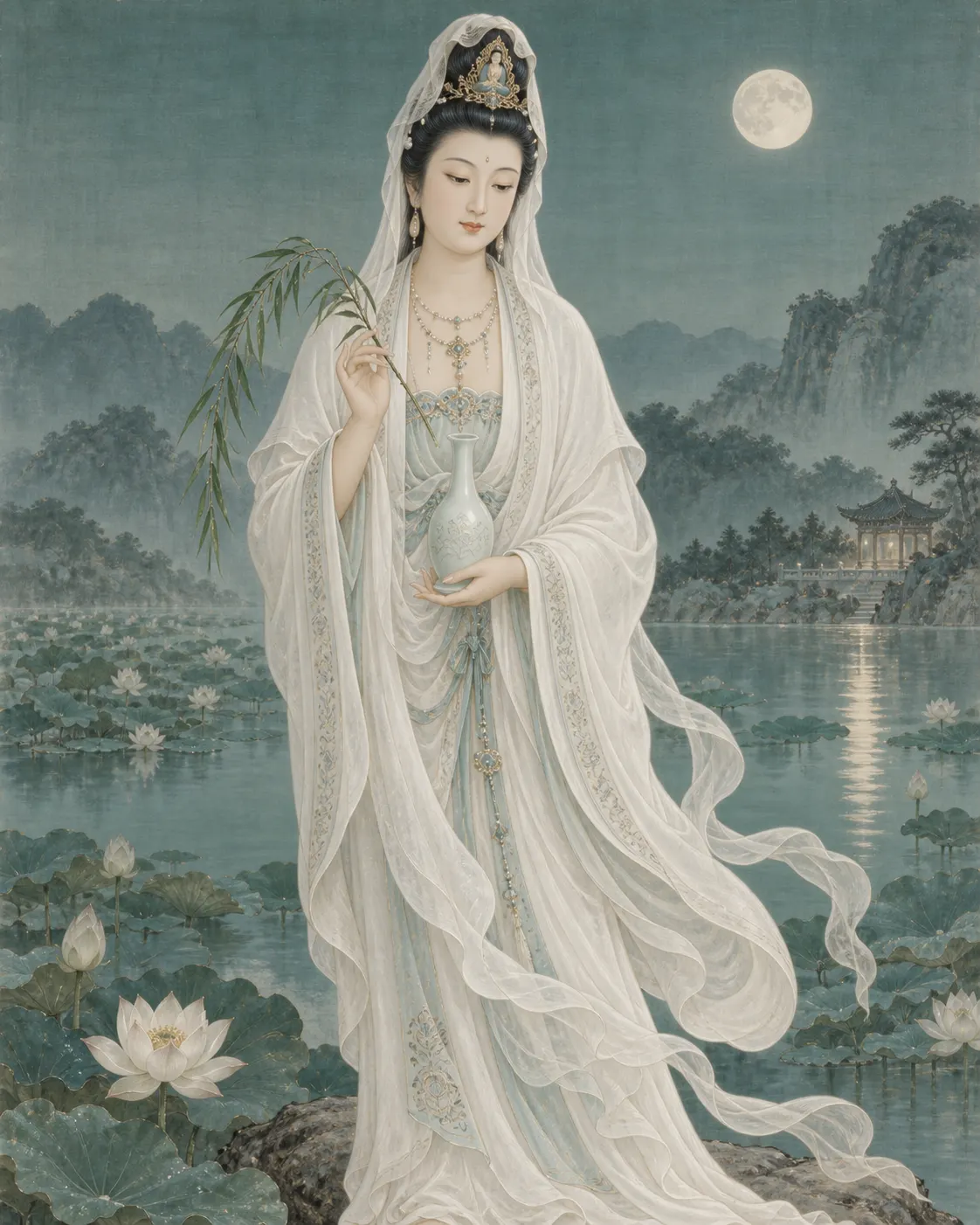
Guanyin (Kuan Yin, 觀音) and Guanzizai are Chinese renderings associated with Avalokiteshvara, whose representations developed varied gender expressions and local forms. Dizang, or Kshitigarbha, is associated with vows concerning suffering beings and especially with narratives about the dead. Maitreya occupies a temporal position as a present bodhisattva and future buddha. Samantabhadra is strongly associated with expansive conduct and vows. These associations are reading entry points, not exclusive service categories assigned to each figure. A person’s prayer concerning study or family does not redefine a figure’s entire scriptural identity. Individual figure pages help identify names, but fuller understanding requires returning to particular texts, images and regional histories of devotion.
Read images through several clues
Buddhas often wear monastic robes and bodhisattvas often wear crowns or jewelry, but artistic conventions vary across time and place. One accessory is not enough for a firm identification. Consider inscriptions, gestures, objects, mounts, attendants, placement and the original institution together. Protectors serve roles connected with safeguarding the teaching; weapons or fierce appearances are not automatically signs of evil. A named figure can also receive different interpretations in Buddhist, Daoist and local settings. Keep Buddhist accounts of awakening distinct from Daoist divine rankings. Joining the Three Pure Ones, the Jade Emperor, buddhas and bodhisattvas into a single chain of universal command would manufacture a system that the evidence does not establish. For an uncertain image, label an identification as tentative and record its basis; missing inscriptions or attributes can leave several reasonable interpretations open.
Classics & reading
- Lotus Sutra, Universal Gateway chapter
- Read forms of manifestation within the salvation narrative, distinguishing religious expression from empirical evidence.
- Flower Garland Sutra, Samantabhadra’s vows
- Study conduct, vows and dedication rather than remembering only a mount or visual attribute.
Check your understanding
Why is a bodhisattva not simply a god one rank below a buddha?
Show a suggested answer
Bodhisattva identity concerns aspiration, vows, cultivation and teaching, which cannot be reduced to one universal divine hierarchy.
Meet the related figures
Sources
- The Met: Buddhism and Buddhist Art (opens in a new window)
Supports changing iconography and Maitreya’s identity as bodhisattva and future buddha.
- The Met: How to Read Buddhist Art (opens in a new window)
Supports attention to regional, historical and image-making contexts.
This is a guide to cultural and intellectual history. Scriptural teaching, religious claims and historical study have different roles here. Describing a belief does not establish its effects. Editions, regions and lineages may differ; this site represents no religious institution.
This site is offered for entertainment and self-reflection purposes only. This is not financial advice. It is also not medical advice, not legal advice, and not a substitute for a licensed professional. No particular outcome, result, or benefit is promised or assured.